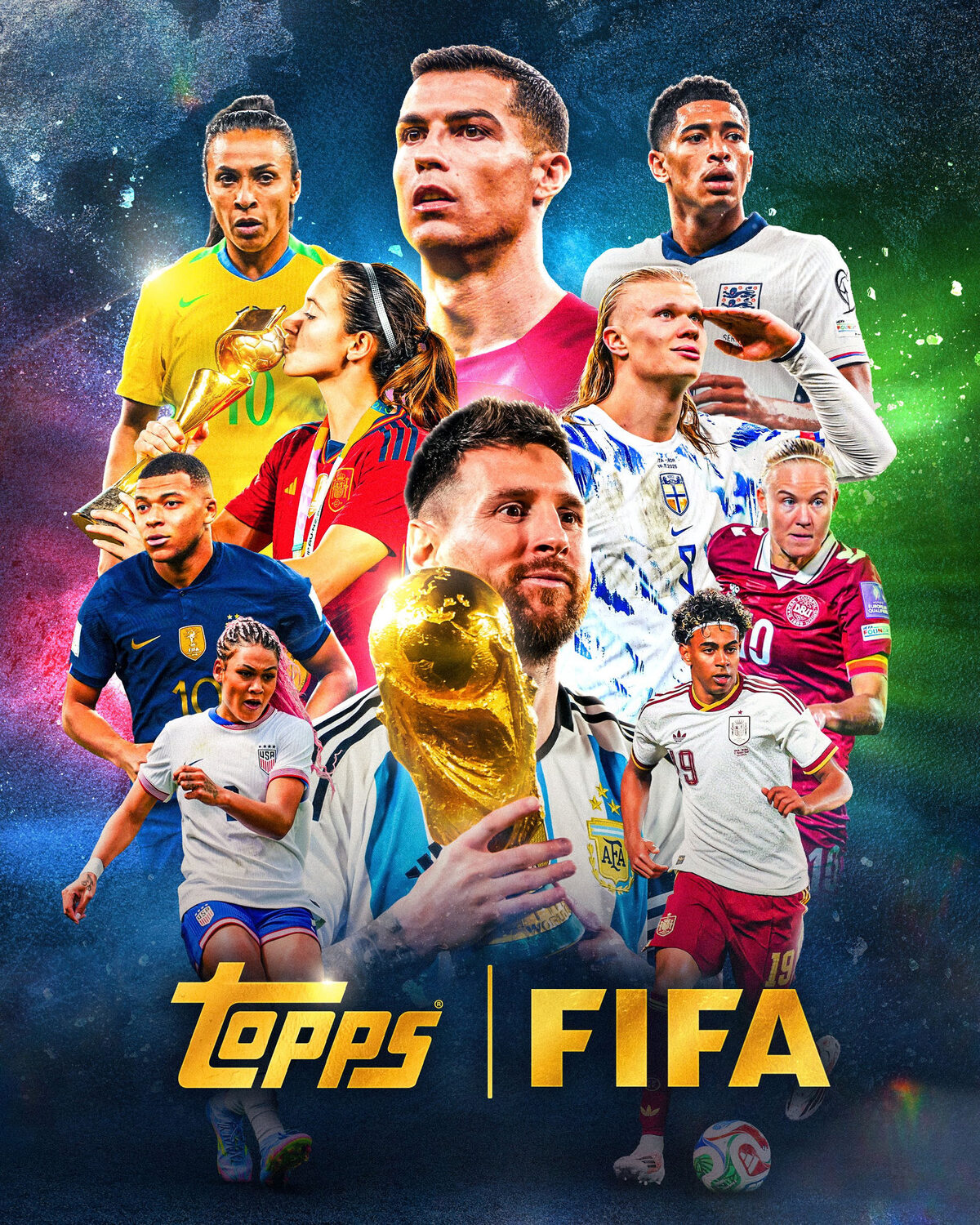
FIFA, Fanatics and Topps announced today, Thursday May 7, 2026, a long-term exclusive collectibles partnership that ends one of the longest-running licensing relationships in sports: Panini's 60-year run as the official sticker and album partner of the FIFA World Cup. From 2031, Fanatics Collectibles — operating under the Topps brand — takes over the rights to design, produce and distribute FIFA-licensed trading cards, stickers and trading card games, in both physical and digital formats.
The headline for collectors is unambiguous: the 2030 World Cup, hosted by Spain, Portugal and Morocco, will be the last World Cup with a Panini sticker album. From the 2031 calendar onwards — including all FIFA-tournament collectibles produced under the new license — every World Cup card, sticker and trading-card-game product will be a Topps / Fanatics product. This is the largest single shift in international football collectibles since Panini took over the World Cup license in 1970.
What Was Actually Signed
The contract is a long-term exclusive licensing agreement between FIFA and Fanatics, with Fanatics Collectibles operating under the Topps brand for execution. The scope covers:
- Trading cards — the chase-card category Topps already dominates in MLB, and which Fanatics is rapidly expanding across global football through Topps Chrome UCC, Topps Chrome Premier League, and other licensed soccer Chrome lines.
- Stickers — the album-and-stickers category Panini has owned since the 1970 Mexico World Cup. Topps has its own sticker history (Match Attax, sticker albums under various football federations), but the FIFA flagship has always been Panini's.
- Trading card games (TCGs) — a category that didn't meaningfully exist in football collectibles until the last decade, and one Fanatics has flagged as a growth opportunity tied to digital ownership.
- Physical and digital collectibles — the deal explicitly includes both physical cards/stickers and digital assets, integrating traditional album collecting with digital-asset technology.
Economic terms have not been disclosed. As part of the activation, Fanatics will distribute more than $150 million ($150M, approximately €130.5M) in free collectibles across the duration of the agreement — a giveaway scaled to drive youth engagement with football collecting in markets where the hobby has always run on free-pack momentum.
The Timeline: 2026 Activation, 2030 Last Panini Album, 2031 Full Handover
Despite headlines describing this as "Panini out" — and that's the long-term reality — the activation calendar is more layered:
- 2026 World Cup (USA / Canada / Mexico) — Panini retains the album license. However, Fanatics begins activating the new partnership immediately. Fanatics already operates as the official retail and merchandising partner inside the 2026 World Cup stadiums and Fan Festivals. Now, Fanatics Fest in New York will host the official pre-final press conferences on July 17, 2026, and the Javits Center will run an official FIFA fan zone on July 19, 2026 — final day. So 2026 is a parallel-rights year: Panini still ships the album; Fanatics runs the in-venue commerce and event activations.
- 2027–2030 transition years — Panini retains its FIFA collectibles license through the 2030 World Cup. The 2030 Spain-Portugal-Morocco album — the centennial edition of the World Cup, since the first World Cup was held in 1930 — becomes Panini's final FIFA album.
- 2031 onwards — Fanatics Collectibles / Topps takes over the entire FIFA collectibles ecosystem under the new exclusive deal. This covers the 2034 World Cup (Saudi Arabia), all FIFA Women's World Cups inside the contract window, the FIFA Club World Cup, FIFA youth tournaments, and any other FIFA-property collectibles.
For collectors, that timeline matters. The 2030 album becomes the last of an era — and historically, "last under previous licensee" products carry a long-term collectibility premium once the handover is complete. The Panini-printed 2030 World Cup album will be a permanent reference object in football collecting.
The 60-Year Panini Era — Context
Panini's sticker album is, for an entire planet of football fans, what a World Cup feels like. The Italian brand printed its first FIFA World Cup album for Mexico 1970. Every album since — Munich 1974, Argentina 1978, Espana 82, Mexico 86, Italia 90, USA 94, France 98, Korea/Japan 2002, Germany 2006, South Africa 2010, Brazil 2014, Russia 2018, Qatar 2022 — has run through Panini. The "fútbol = Panini stickers" association is a 60-year cultural fixture across Latin America, Europe and North Africa. The album is, for many fans, the closest thing the sport has to a global ritual.
Panini also runs the FIFA Women's World Cup album, FIFA Club World Cup stickers, and a wide range of confederation-level products (UEFA Euro stickers, Copa America in some cycles, AFC products in others). The new FIFA-Fanatics deal does not automatically affect confederation-level licenses (UEFA, CONMEBOL, etc.) — those are separate contracts that Panini still holds and which run on their own renewal cycles. But the FIFA flagship was the crown jewel.
Panini's loss of the FIFA license follows a wider pattern of the company losing top-tier licenses to Fanatics-affiliated entities: Panini lost its NFL exclusive license to Fanatics in 2026, and the NBA exclusive previously, leading to the current "unlicensed era" Donruss basketball products. The FIFA loss completes the trio. Panini's remaining strongholds are now confederation-level European football (UEFA, La Liga, Serie A, Bundesliga, Premier League rights vary), Formula 1, and various non-FIFA national licenses.
What Fanatics / Topps Brings to FIFA Collectibles
Topps already has the strongest current product roadmap in licensed soccer cards. The recently launched Topps Chrome UEFA Club Competitions 2025-26, Topps Chrome Premier League 2026, Topps Bundesliga and Topps Now soccer products demonstrate the tooling that's now coming to the World Cup category: Chrome Refractor rainbows, autograph layers running into the legend tier, etched and patterned premium inserts (Logofractor, Sapphire), 1/1 SuperFractors, and on-card patch cards.
The most-discussed innovation in the announcement is the jersey patch program — Topps refers to it as "World Cup Debut Patch" cards. Topps has run this program with success in the MLB and NBA: cards embedded with a swatch of the actual game-worn jersey from a player's debut in a major tournament. From 2031 onwards, FIFA collectibles will include patch cards featuring jersey fabric from players' debut FIFA-tournament appearances — first World Cup match, first Club World Cup match, first FIFA Women's World Cup, etc. This is the first time international football has had a structured patch-card program, and it's a meaningful upgrade in the "lottery ticket" tier of football collecting that, until now, has been the domain of confederation-level products like Topps Chrome UCC and panini Eminence.
The physical-plus-digital framing is also new for World Cup collectibles. Panini's recent Sticker Album app (digital sticker collection paired with physical) showed there's appetite for hybrid products, but Fanatics is positioned to push much further into digital ownership, given Topps' historical experience with digital trading cards (Topps Disney Collect, Topps Bunt, Topps NFTs, MLB digital products). Expect FIFA-branded digital trading-card platforms tied to physical product release windows from 2031 onwards.
Quotes From the Announcement
Gianni Infantino, FIFA President: "This partnership provides another commercial revenue stream that we channel back into football." The framing — collectibles revenue funding football development — is consistent with FIFA's recent commercial messaging around the 2026 World Cup and the expanded Club World Cup format.
Michael Rubin, Fanatics founder and CEO: Rubin described global football as "the largest growth opportunity in sport." That positioning matches Fanatics' broader strategy — the company has been aggressively expanding internationally beyond its US sports core, and the FIFA deal is the largest single international sport license signed by the group.
What This Means for Collectors Right Now
Three categories of action items shake out of this announcement:
1. The 2030 Panini Album Becomes a Historic Object
The Spain-Portugal-Morocco 2030 album will be Panini's last FIFA World Cup album, and 2030 is also the centennial of the World Cup itself (Uruguay 1930). The combination — last Panini album + 100th anniversary World Cup — gives the 2030 album a near-guaranteed long-term collectibility floor. Sealed boxes of the 2030 album (especially Hardcover and any Swiss-edition variants Panini ships) are likely to follow the trajectory of the Mexico 1970 album: gradually treated as a permanent reference object, with sealed-product values rising over decades. If you collect World Cup albums and missed any past edition, plan to buy 2030 in bulk at release.
2. The 2026 Panini USA/Canada/Mexico Album Is the Penultimate
The 2026 World Cup album, also Panini-produced, becomes the second-to-last Panini FIFA album. Most collectors will accumulate this normally — the cultural significance is captured at release through the standard "World Cup year" hype rather than retrospective scarcity. But if you skip World Cup albums in non-trophy years, 2026 is one to grab anyway, given its position in the historical sequence.
3. From 2031, Football Collecting Looks More Like NFL/NBA Collecting
The Fanatics/Topps model — Chrome refractor rainbows, on-card autographs at scaled pull rates, embedded jersey patches, 1/1 SuperFractors, hybrid physical-digital ownership — is structurally different from Panini's album-and-sticker model. From 2031, collecting World Cup product will involve much more of the language collectors of Topps Chrome soccer, NBA rookie cards, and Topps Now baseball already use: parallels, pull rates, box configuration choices (Hobby vs Jumbo vs Sapphire), grading-eligible Chrome stock, and singles aftermarket on Cardmarket and eBay. If you're a sticker-album-only World Cup collector, 2031 is the year to start learning the Chrome-product vocabulary.
What This Means for the Wider Industry
The FIFA deal completes Fanatics' positioning as the dominant force in licensed sports collectibles globally. Combined with their NFL, NBA, MLB, UFC, Topps Chrome UEFA licenses and now the FIFA flagship, Fanatics-affiliated products will cover the four largest collectibles categories worldwide from 2031.
Panini's strategic situation is now much more constrained. Without FIFA, NBA or NFL exclusivity, Panini's strongest remaining licenses are confederation-level European football (UEFA Euro, La Liga, Serie A, Bundesliga where applicable), Formula 1, and the long-standing relationships with national football federations across Latin America. Whether Panini pivots toward "unlicensed but design-strong" product lines (the Donruss Basketball unlicensed-era model), doubles down on European football, or restructures will become clear over the next 24 months.
For Whatnot, eBay, Cardmarket, and the rest of the secondary-market ecosystem, the transition years (2027-2030) will be unusually busy. Panini's final-FIFA-album narrative will drive 2030 album speculation; Fanatics' 2026 World Cup activation in NYC (Fanatics Fest, Javits Center fan zone on final day) will produce a wave of high-value memorabilia, autographs, and limited-print Topps Now-style products tied to the tournament; and the 2031 transition will produce the first major "first-Topps World Cup product" rookie cohort. Each phase is a separate market opportunity.
How to Track the Transition in CardPulse
CardPulse handles both halves of the transition cleanly. For Panini's last albums (2026 USA/Canada/Mexico and 2030 Spain/Portugal/Morocco), log each sticker, parallel and box format with live values pulled from Cardmarket, eBay, eBay UK and eBay.es. For the new Fanatics/Topps products from 2031 onwards, the same Chrome-product workflow that already works for Topps Chrome UCC applies — base number, parallel level, serial, autograph type, box configuration. The dashboard treats the era boundary as just another filter, so a collector tracking "every World Cup product I've ever bought" gets one valued portfolio that crosses both Panini and Topps.
Related reading: